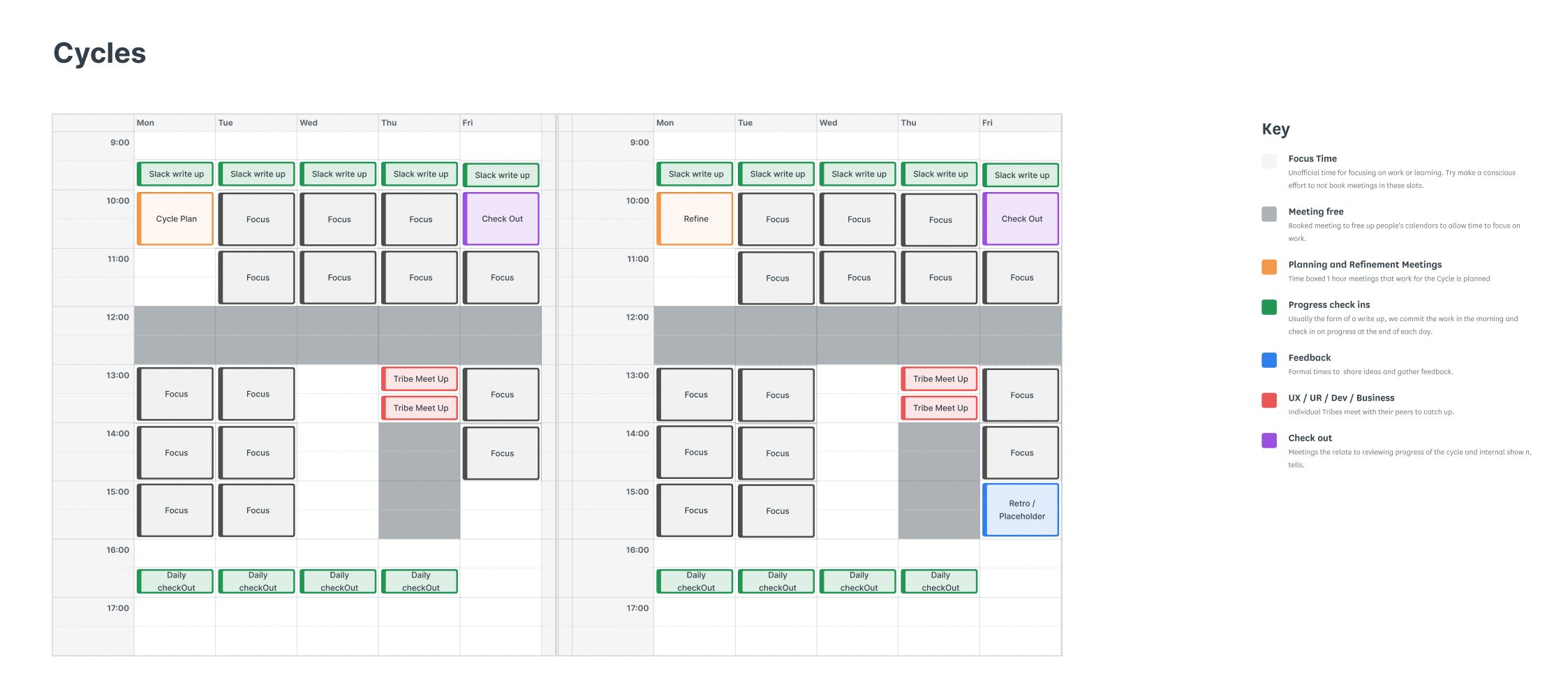
Working on ‘Ways of Working’
We introduced a new way of working called ‘Cycles’, inspired by Basecamp’s Shape-Up.
The main goal was to break down silos and improve collaboration between the dev team and other disciplines. We made a number of changes to the traditional sprint structure.
We ran each Cycle over 8 weeks, split into 4 Phases of 2 weeks. That cadence aligned with existing agile models and was minimally disruptive, which helped us stay responsive to change.
We implemented automatic check-ins using Slack bots. At a set time each day (e.g. 9:30 am), team members received a message asking for a short daily write-up: what they were working on, any blocks, and any other updates. That replaced the stand-up, which had been time-consuming and not always productive.
Another key piece was the ‘Retro bucket’. Instead of a retro at the end of every sprint, we only held one when the bucket overflowed. The bucket was a virtual container for items that would normally be discussed in a retro. When it reached a threshold (e.g. 30 items), we scheduled a retro. Otherwise we waited until the end of the cycle. We had fewer retros, but they were more focused and more likely to lead to real change.
We modified the planning phase and split it into four stages: planning, refinement, 3amigos, and cooling off. In planning, team members picked their appetite for the whole cycle and discussed features and epics rather than assigning tickets. In refinement, work was broken down into specific tickets. In 3amigos, we reviewed tickets and denied and archived any that were untenable. Cooling off was for wrapping up remaining tickets, show and tell, stakeholder engagement, and the retro.
We used a simple KanBan board with six buckets: To do, Blocked, In Progress, Review Pending, Ready to Test/UR, and Done, split into two swimlanes: Dev on top, Design / Research at the bottom. Flow was left to right and bottom up. That kept the workflow visible without extra meetings.
We also instituted strict meeting rules: clear agenda, time-bound, recorded, with published outcomes. No more than three people in attendance except for cycle meetings. The aim was more efficient meetings and calmer calendars.
Cycles helped us break down silos and collaborate better. I care about long uninterrupted focus time, and Cycles was designed to protect that. Culture isn’t vision and mission statements, it’s what you do every day, how you work, and how you respond to change. I hoped it would spread to other teams and see broader adoption.
What a Cycles calendar looked like