The section
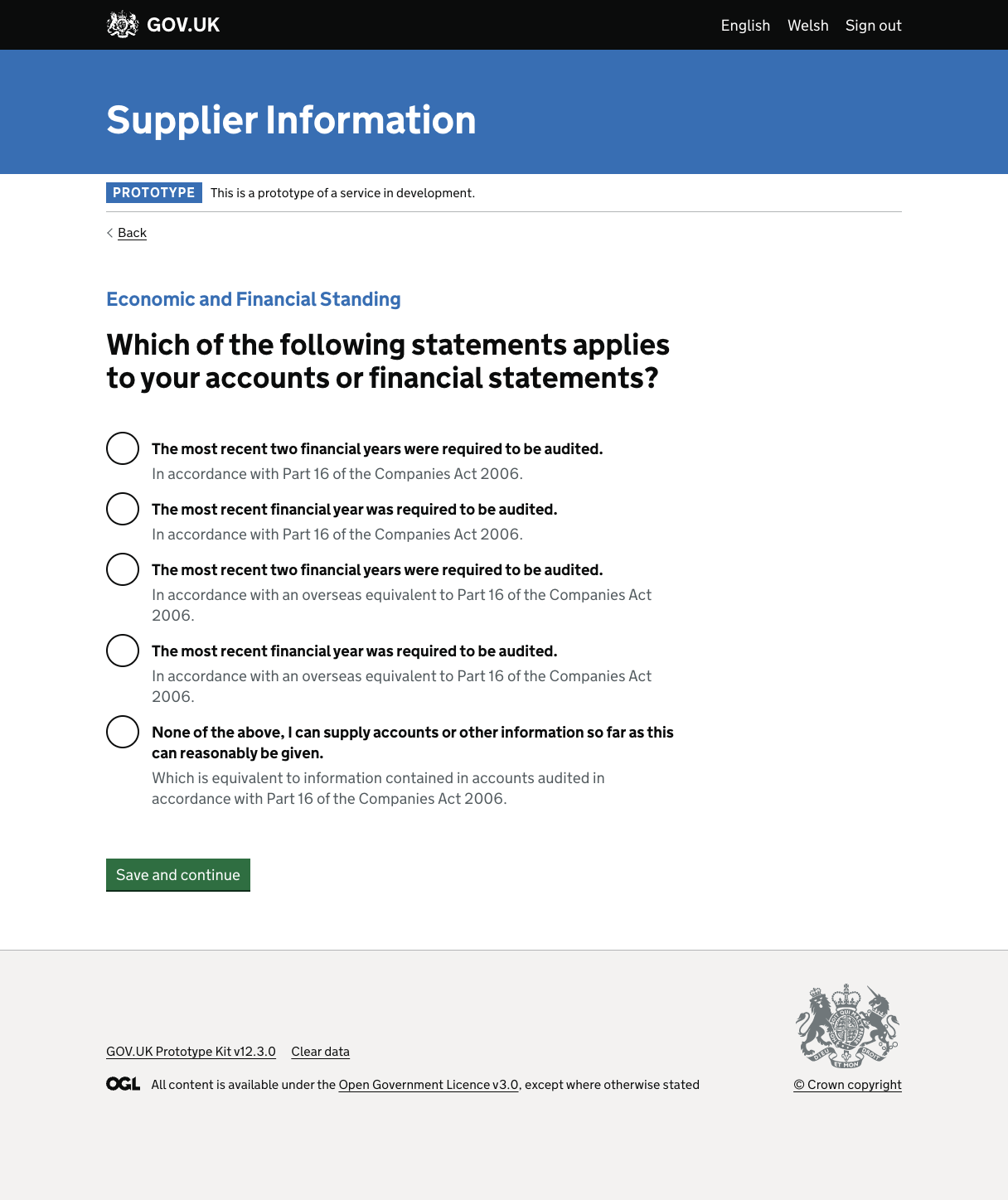
The final part of the organisational information journey asked users to declare financial and economic standing: whether they had undergone a prior audit and to upload supporting documents. A standard approach would be step-by-step: a series of three to five boolean questions (depending on answers), followed by a file upload, then a check-your-answers summary.
The research
User research surfaced a clear problem. The questions were too similar. Users couldn’t tell them apart. The progression felt like repetition rather than clarity, and people left the section uncertain they had answered correctly.
Before the enhancement
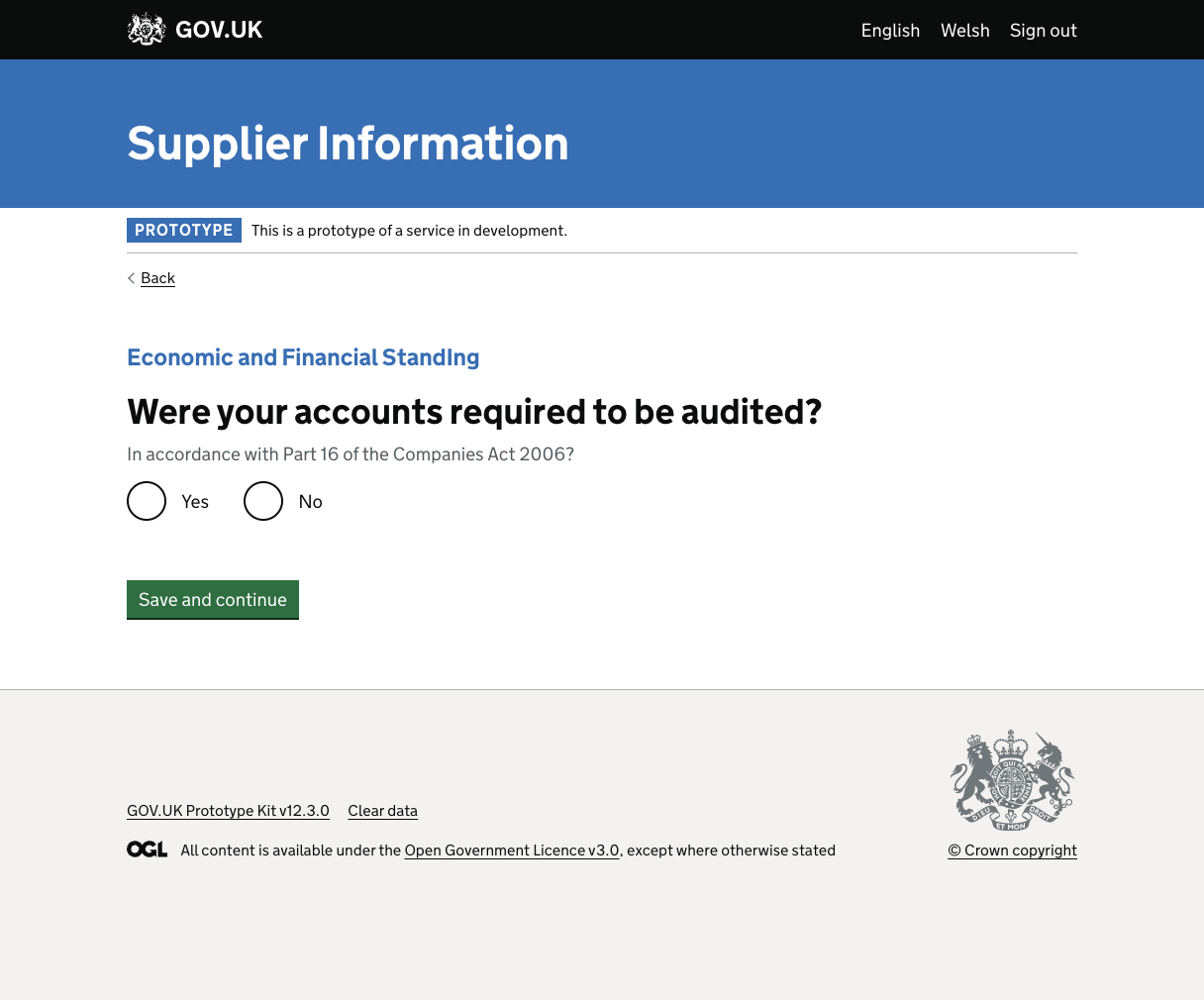
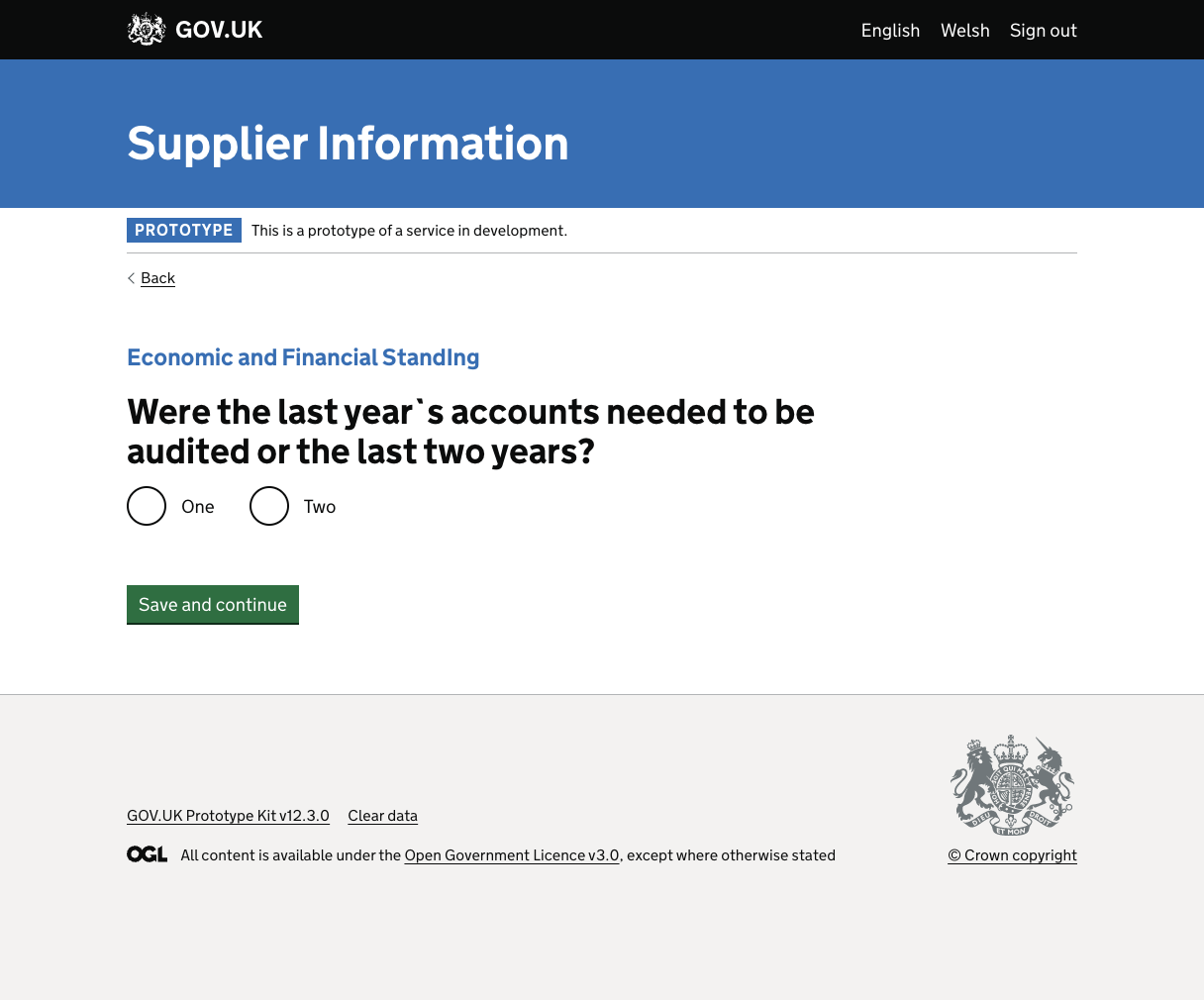
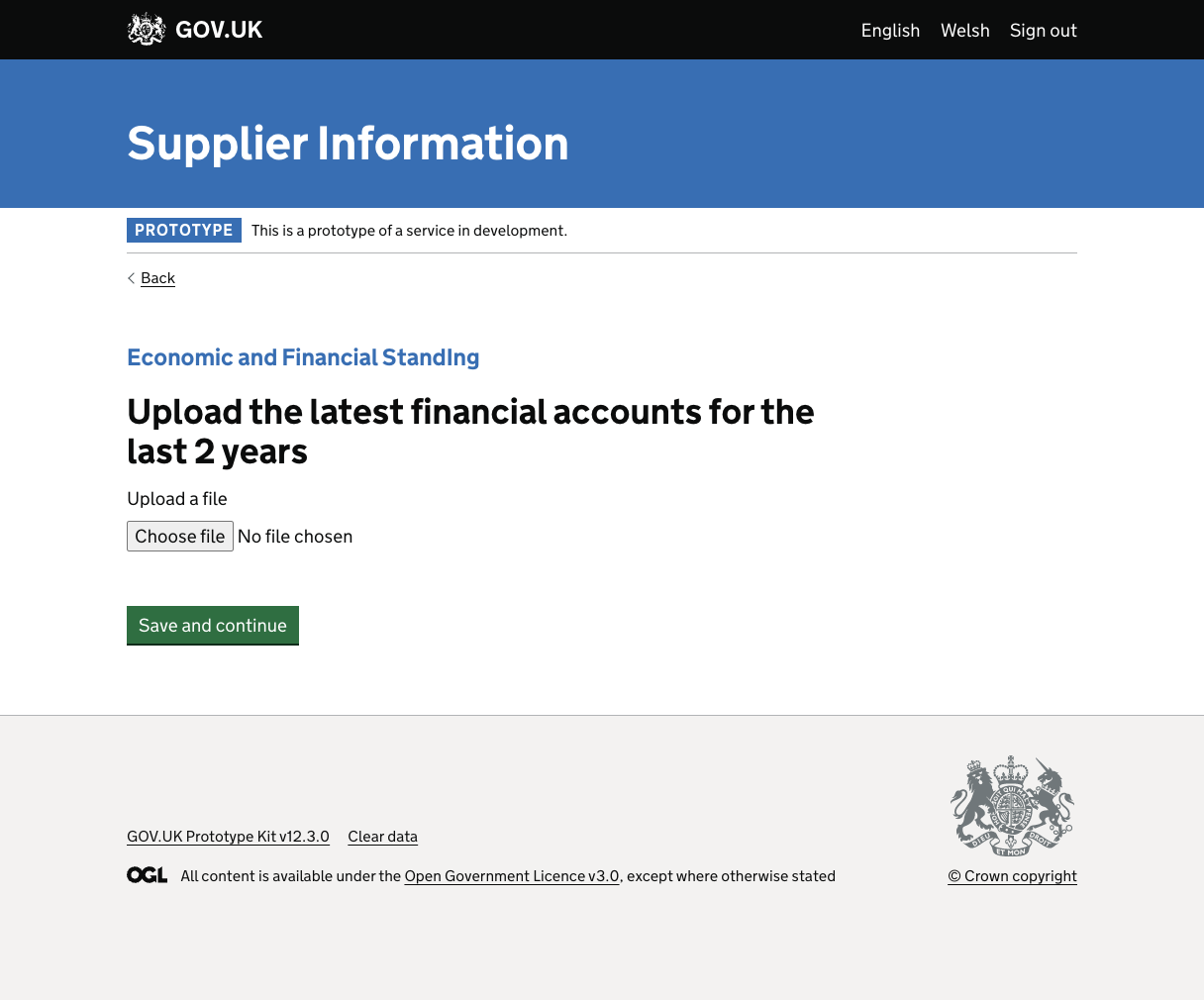
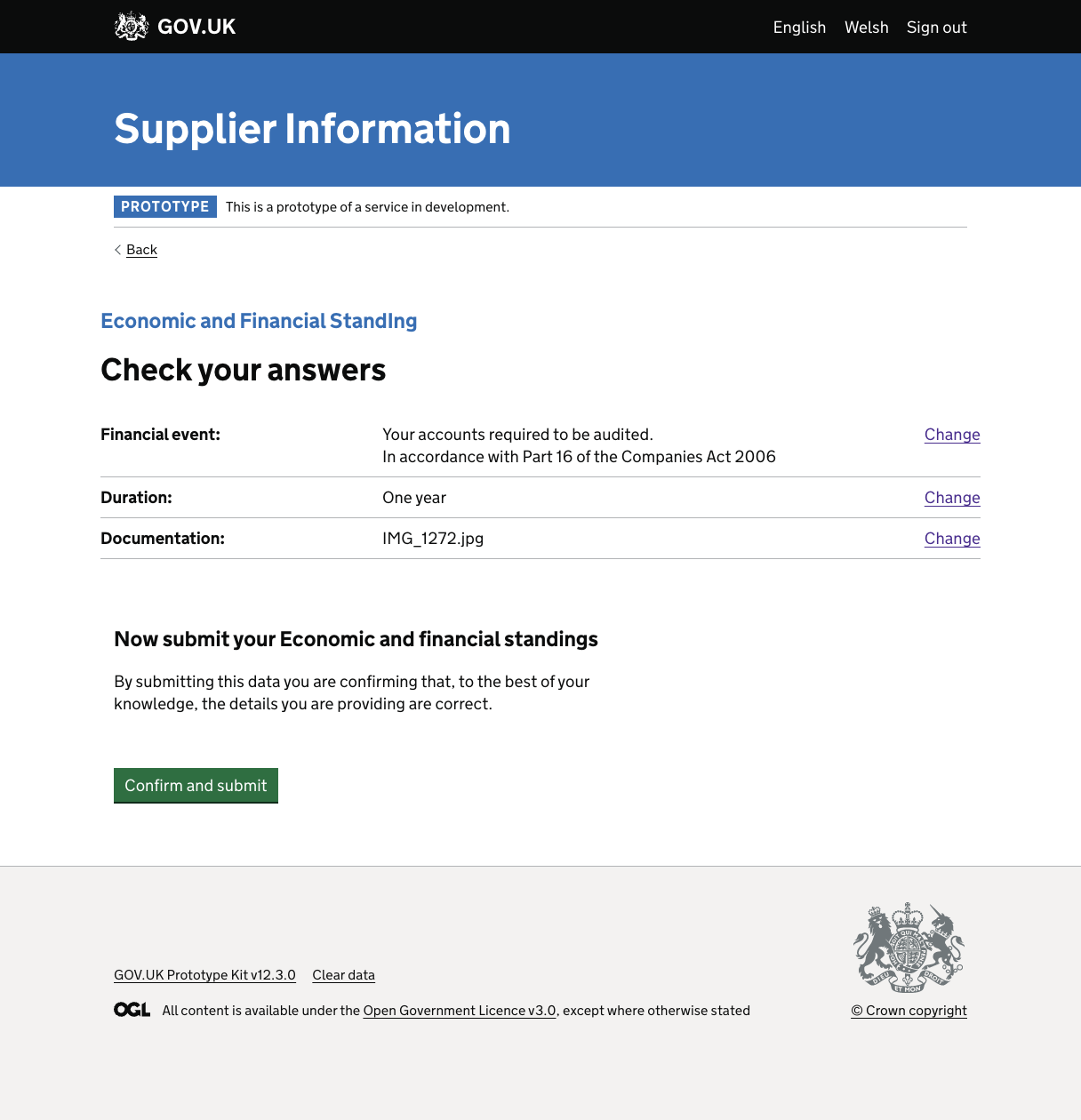
Breaking the pattern
We decided to bring all the questions together and show every possible outcome upfront. One screen instead of five. The design system favoured progressive disclosure, one thing per page, but the research showed that convention was failing here. Similar questions spread across multiple screens created confusion. Similar questions on one screen, with clear differentiation, created understanding.
After the enhancement
The principle
Conventions exist for good reasons. But when research shows a pattern is failing, the right response is to try the alternative, document why, and test it. If the second round of research reveals shortcomings, we return to the drawing board. The outcome matters more than the pattern.